
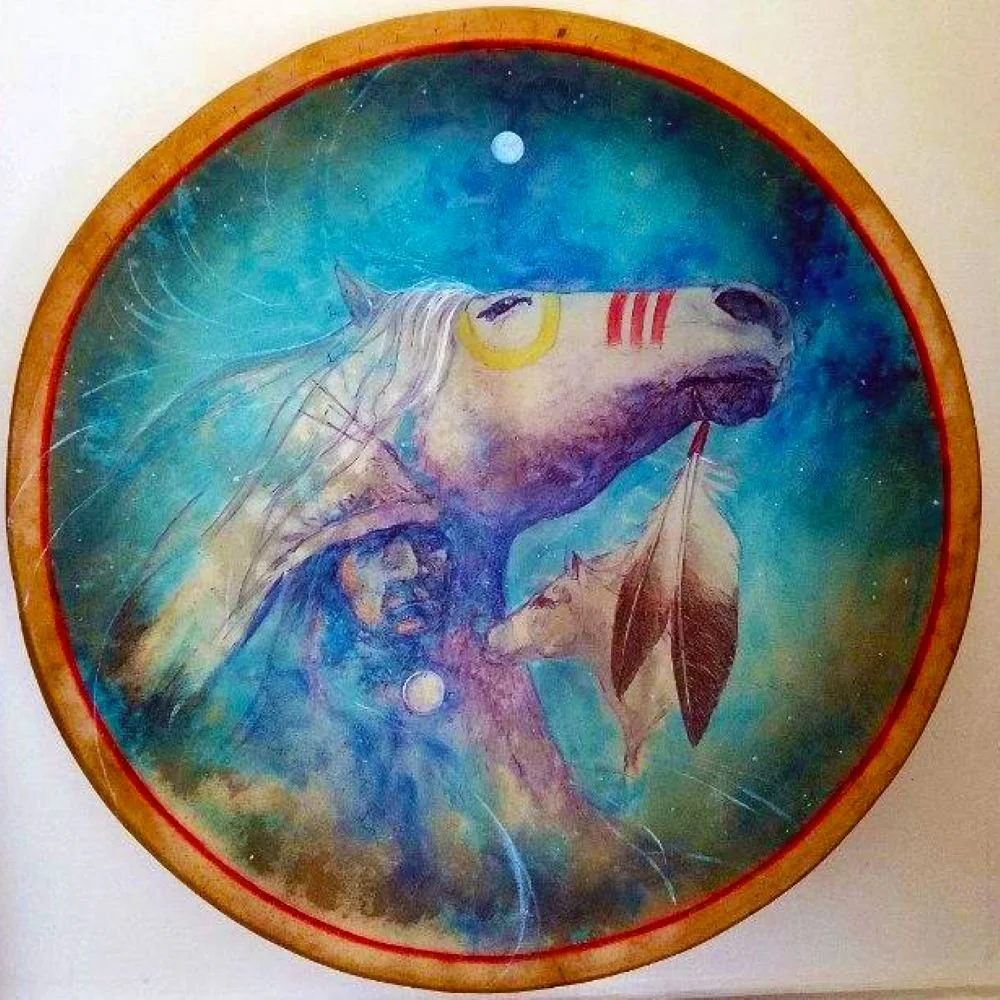
Tending A Living, Sacred Instrument
A shamanic drum should be seen as a relative, not an object. It is rawhide and wood, a piece of the animal and plant nations, made to hold a spirit and to carry prayer. Master drum maker David Craig, who has made many of the drums held by our community, teaches that a drum is best treated the way you would treat a relative. You would not toss your grandmother in the trunk of the car, he says, so do not toss your drum there either. Give it a seat. That single shift, from owning a thing to caring for a relative, is the heart of everything that follows.
The Two Things That Harm A Drum
A traditional drum is rawhide, with no tanning and no chemicals, so it responds to its environment like skin. Two conditions do the most damage. The first is staying wet. A quick splash is nothing, but a drum left damp for a long time will suffer. The second, and the more common danger, is direct sunlight. A drum hung where the sun strikes it for hours a day will dry out and crack, just as your own skin would, and in time the whole face can split. Keep your drum out of direct sun, and keep it somewhere that is neither soaking nor bone dry.
Reading And Tuning The Skin
Rawhide tightens in heat and dryness and loosens with moisture, which is why a drum's voice changes with the weather. Turn your drum over now and then and look at the back, especially the lacing, where the hide is under the most stress. Tiny cracks tend to start there when a drum has gotten too dry and tight.
If your drum feels overly tight, or you live somewhere dry, or indoor heating has parched the air, give it a drink. David suggests running a little water over the back of the hide, or wetting the back by hand. The drum is thirsty, and water is life. It will absorb what it needs and relax, and you will not harm it. If a small crack has already appeared, a dab of glue can keep it from spreading, and from there the hide will want some oil.
Oiling Your Drum
When the hide looks dry, feed it oil the way you would put lotion on dry skin, using only natural oils. Mink oil, coconut oil, or a good virgin olive oil all work well, and rendered bear fat is the traditional choice where it is available. Rub the oil into the back of the drum, the skin side, where it absorbs quickly. Do not oil the front face, especially on a painted drum, because oil keeps pigment from holding and can alter the artwork. A light rub on the back, now and then, keeps the whole drum supple and alive.
Playing With Respect
How you play is part of how you care. The center of the drum is its heart, so we do not strike it hard there. Play gently around the edge, and if you want to hit with real force, bring it down away from the middle. It is a small courtesy, and it is of a piece with treating the drum as a living relation rather than equipment.
Welcoming And Feeding A New Drum
When a drum first comes to you, David teaches, take a moment to meet it. Burn a little sage or cedar, hold the drum, and smudge it. Give thanks to the drum, and to the animal and the tree whose bodies became it. Then, that same day, feast your drum. Set out a spirit plate: a small offering of your food, a little of whatever you are eating, and some water, placed outside for the spirit of the drum. Offer it before you eat yourself. Something will come along and take it, a bird, a stray cat, whoever, and that part is not our business. What matters is that you have shared a meal. Breaking bread with the spirit of your drum opens the heart between you, and that is where the real connection begins.
Cared for this way, a good drum will last a lifetime and become one of your closest companions on the path. It is, in the end, less about maintenance than about relationship, tending something sacred that is here to help you.
Learning to journey with the drum is the very first step of the shamanic apprenticeship. If you are drawn to this work, you can begin with Fundamentals of Shamanism.