Apus - The Sacred Mountain Spirits of the Andes
In the Andes, a mountain is not a thing, it's a someone.
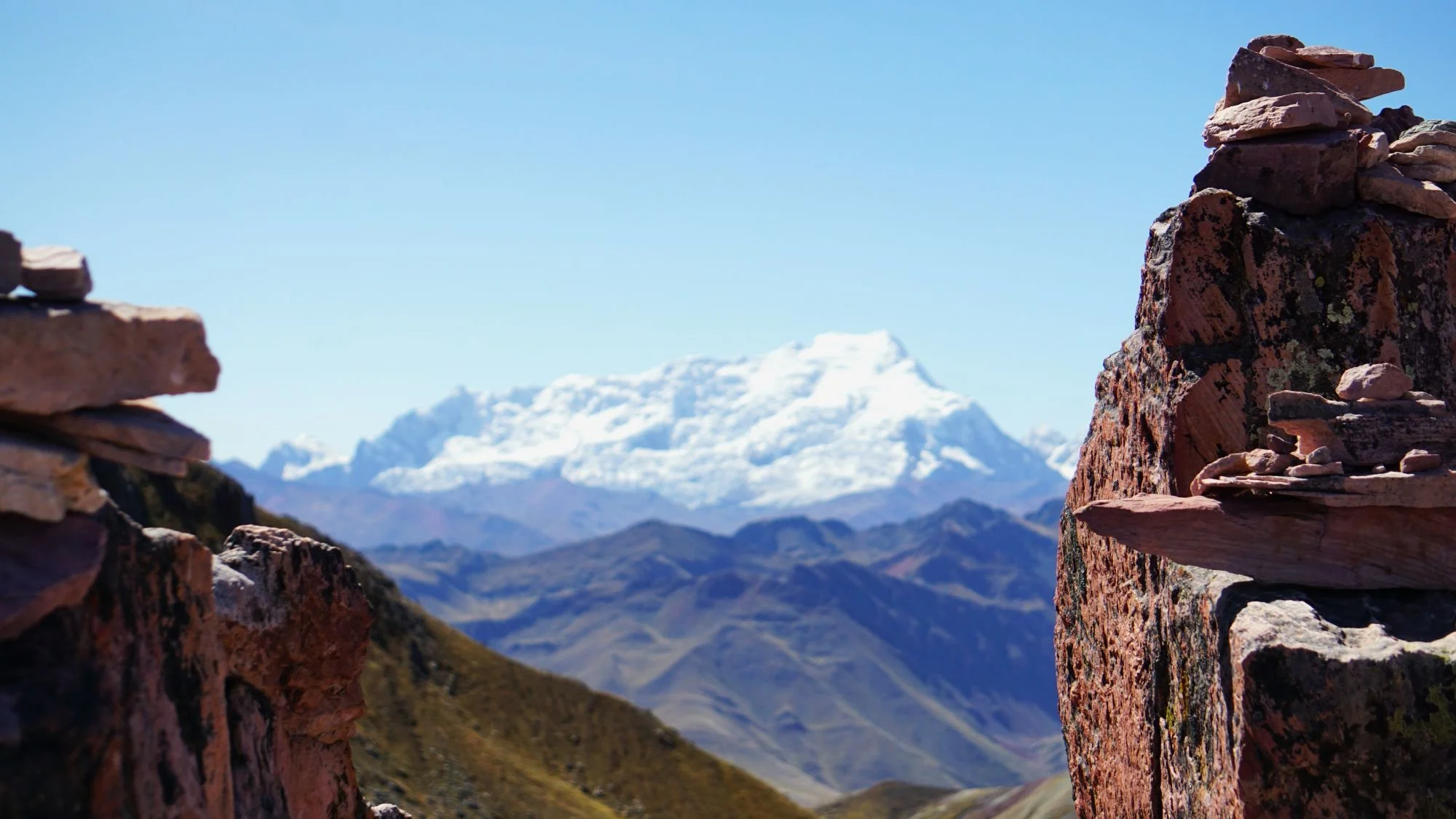
The Quechua word Apu means honored one and it's the name given to the great mountain spirits. Each Apu watches over the valleys, villages and people below it. It brings the water that melts from its glaciers into the fields, and it holds the weather, the health of the herds, and the wellbeing of the families who live in its shadow. People speak to their Apus the way you might speak to a grandparent: with respect, with affection, and sometimes with a request.
There is a hierarchy. Every hill has its spirit, but some mountains are elders over whole regions. In the Cusco region the greatest is Ausangate, the 6,300 meter glaciated peak. Salkantay, on the far side of Machu Picchu, is another. In the Sacred Valley, the snowy peak of Wakay Willka, commonly spoken as Apu Verónica, rises above Ollantaytambo.
A Story from the Sacred Valley
When traveling in the Sacred Valley, you cannot help but feel the presence of the Apus and the spirits of the land. It is ubiquitous, and everyone from taxi driver to carpenter to auto-repair person is attuned to their energy.
On my first trip to Peru, my taxi driver spent ninety minutes sharing with me the legend of his community as we drove high above Urubamba. It was a rich story of a farmer with three daughters living near the river. But his fields were on a bank fifteen meters above the river, and it was very hard to bring water up and down the hill to water his crops. One day, his eldest daughter walked deep into the mountains and met the spirit guardian of the area. In exchange for her hand in marriage, the spirit guardian made springs come up on the banks of the river near the farmer's crops, so he and his family didn't have to walk up and down the hill to water their crops and fetch water to drink. This is how his community was born.
As my driver shared his story, he beamed with joy, sharing a small part of the richness of his culture with a foreigner who was interested in receiving it. Traveling in the Andes and the Sacred Valley so special because the baseline normal of everyday people is reverence, respect and deep connection with the Apus, the land itself and its guardians.
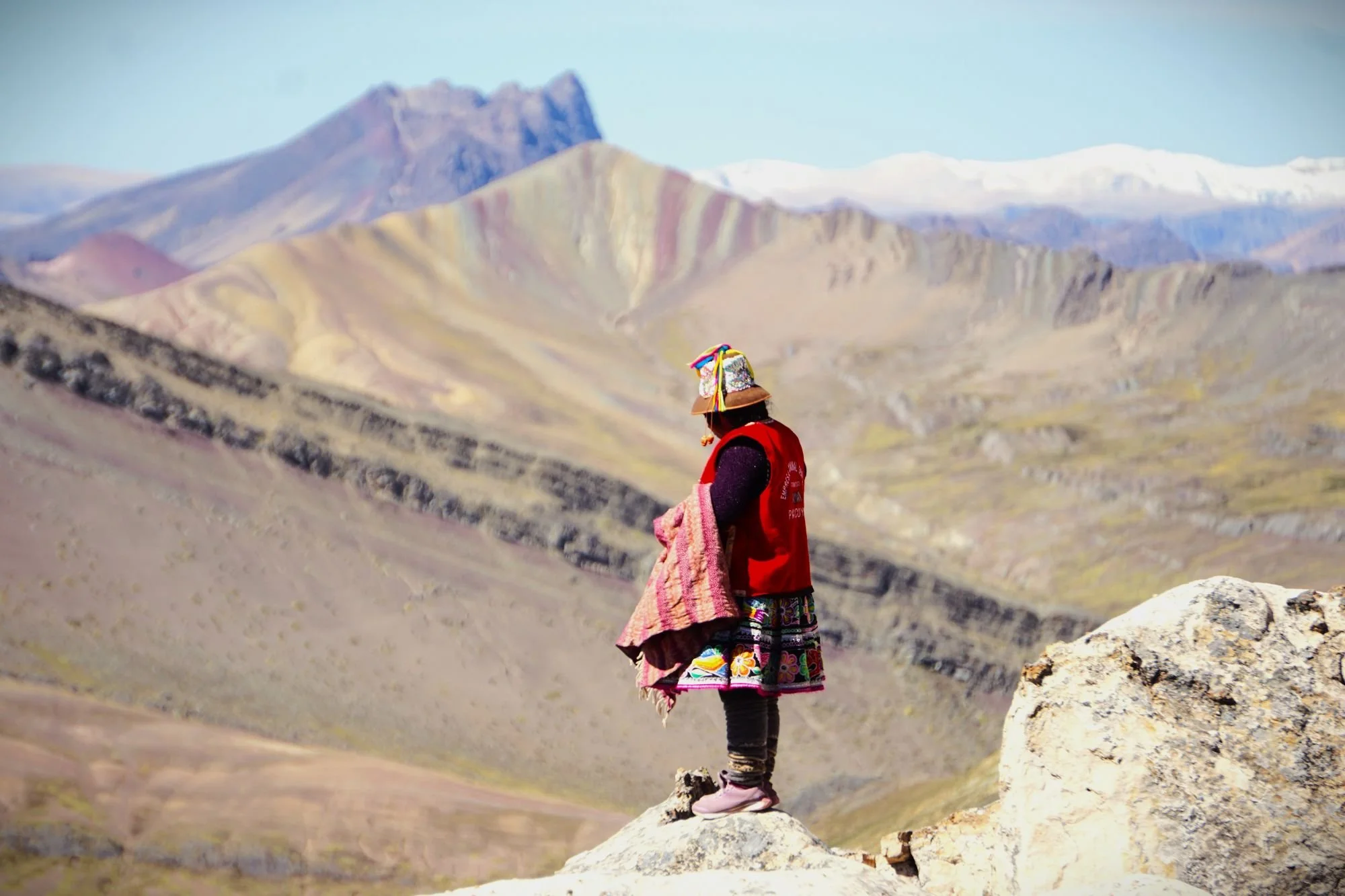
A Quechua woman sanding in reverence looking to the Apu Ausangate from the summit of Palccoyo.
Greeting the Apus
Honoring the Apus by making an offering of coca leaves is a part of daily life. Choose three good leaves, fan them into a small bundle and blow gently across them before offering them to the earth. The breath carries your prayer and your living energy to the mountain. Then the leaves are chewed, buried or burned. It is s short ritual, a break to acknowledge the spirit guardians that helps us take a step back whilst in the midst of mundane affairs. And it changes our relationship with the land: we are no longer walking across a landscape that is outside of us, but we are part of the living web of life, greeting the elder spirits of the mountains, and offering our reverence and respect must as we would when visiting a grandparent or wise human elder.
Take It Home With You
You can offer many different things to the land around you: tobacco, corn, salt, prayer. What is traditional depends on where you live and what natively grew upon the land. You may choose to make your offering to a mountain, a river, a forest or a particular tree, or even to a place that has been disturbed, like a parking lot, sending a prayer that the land come back into balance.
Even beneath ground that has been greatly disturbed, the spirits of the land can be found and some of my most profound connections to the spirits of the land have been at government buildings or in the midst of large cities, where the spirits have been ignored for so long that they are surprised a human still remembers to connect in the ancient ways. What you offer, or the specific shape of your ceremony is less important than your reverence, your respect and the authentic desire for connection that you hold in your heart.